‘Auhea ‘oukou e nā lālā hiwahiwa o ke kumu Hawai‘i. Eia ke aloha a‘e nei i nā lau, nā kumu, a me nā a‘a nō ho‘i o ka lāhui holo‘oko‘a. He welina aloha nui loa iā kākou a pau.
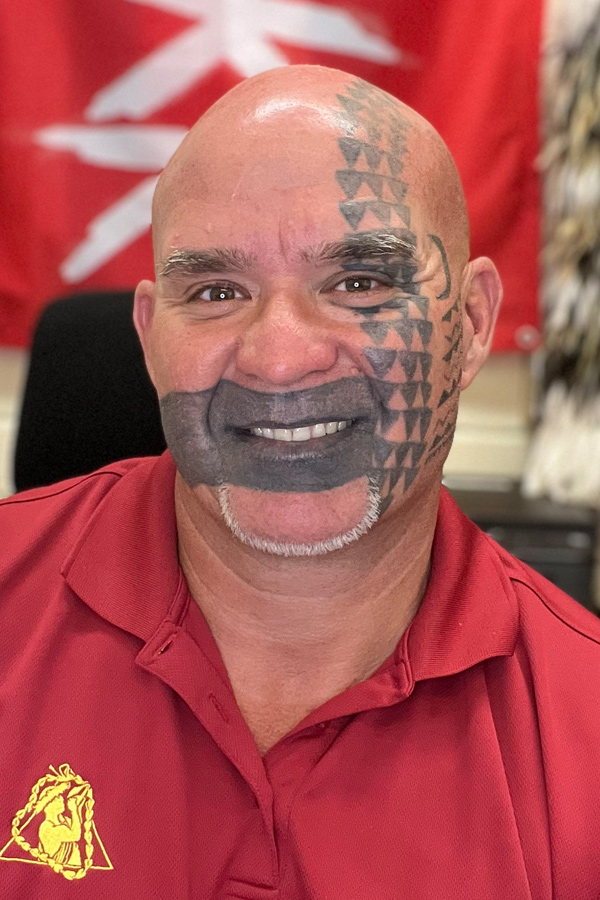
Dr. Kalehua Krug hails from the beautiful district of Wai‘anae on the island of O‘ahu. His family, originally from the island of Moloka‘i, relocated in Nānākuli after acquiring Hawaiian homelands. Kalehua graduated from the Kamehameha Schools in 1994 where he was a scholar athlete accomplishing state accolades in football. Upon graduation, he earned an athletic scholarship to San Diego State University and transferred home to the University of Hawai‘i at Mānoa where he ultimately finished his athletic career and graduated. As a result, his professional trajectory focused on the advocacy for and teaching of ‘Ike and ‘Ōlelo Hawai‘i after formally studying the Hawaiian language and culture. Now, as a father of three children who were raised in the Hawaiian language, it is clear that these critical aspects of indigeneity became the heartbeat of his advocacy for children and for indigenous education.
Early on, as a Hawaiian language immersion teacher, Kalehua examined the nature of education and the psychological importance of dual language learning on developing learners when integrated with indigenous knowledge. This research continued as a Hawaiian immersion teacher educator at the College of Education at the University of Hawai‘i at Mānoa where he coordinated teacher licensing programs. It was then that he also gleaned more about how to organize and thoughtfully participate in community advocacy. As a result, Kalehua served as the chair of the ‘Aha Kauleo Hawaiian language immersion advisory group to the Board of Education and as a member of the Hawai‘i State Public Charter School Commission. Doing this gained him critical insights into systemized education.
Notably during this timeframe, Kalehua earned a contract from the Hawai‘i Department of Education, through community advocacy, to develop a formal statewide student assessment in the Hawaiian language to fulfill federal testing compliance requirements. This test became ground-breaking work that helped Hawai‘i to become the first indigenous people with this type of federally approved assessment in a native language. Acknowledging the importance of educational assessments, this movement serves as inspiration for the furtherment of indigenous assessments in all contexts.
Prior to his current role as the Po‘okumu of Ka Waihona o Ka Na‘auao Public Charter School in Nānākuli, he worked as the administrator of the Hawaiian Language Immersion Program of the Hawai‘i Department of Education. With this combination of professional experience, Kalehua honed his leadership skills in Native Hawaiian communities and contexts to incorporate our values, our wisdom and our mo‘olelo. He also gained insight into the true value of our language, our culture and educational empowerment as a mechanism for our communities and our children to achieve Ea.
Kalehua has dedicated his entire life to promulgating the traditions and values of the people who are not only native to this place, but the ones that kept it beautifully for us today. There is great wisdom in our kūpuna and our ali‘i. Kalehua strives to emulate them through thoughtful leadership processes that engage lāhui through their excellence and with their heart. He believes that if we can actualize innovatively how our ali‘i were educated and gift that to our children, they will be fully prepared to represent our lāhui and our ‘āina for generations to come.


Kamehameha Schools’ policy is to give preference to applicants of Hawaiian ancestry to the extent permitted by law.